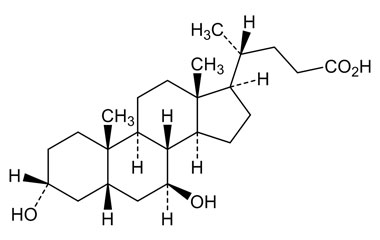
The therapeutic use of Ursodeoxycholic Acid (UDCA) dates back to ancient Chinese medicine, where it was derived from dried bear bile to treat liver and bile-related disorders. The compound began attracting scientific attention in 1902 when Hammarsten discovered a new bile acid in polar bears, which he couldn’t fully characterize due to limited understanding of steroid chemistry at the time. Later in 1927, Shoda identified Ursodeoxycholic Acid (UDCA) in Chinese black bear bile and named it based on its structural similarity to deoxycholic acid and its origin from bears (Latin: ursus). By 1936, the complete chemical structure of UDCA was determined, allowing for its synthetic production and further clinical research.
Ursodeoxycholic Acid (UDCA) entered modern medicine significantly in 1975, when Makino demonstrated its effectiveness in dissolving gallstones. Subsequent studies in the 1980s, such as those by Leuschner and Poupon, highlighted its potential in improving liver enzyme levels and treating primary biliary cirrhosis (PBC). Since then, UDCA has been studied in a range of liver conditions, especially cholestatic diseases.
Today, it is a recognized therapeutic option, although the precise biological mechanisms through which it exerts its benefits remain only partially understood. Current research continues to explore its pharmacological actions and clinical applications.
Medical Applications of UDCA: Therapeutic Uses and Clinical Relevance
UDCA’s pharmacological properties make it valuable in treating several diseases, especially those involving cholestasis and bile acid dysregulation.
Gallstone Dissolution Therapy
One of the earliest and most established uses of Ursodeoxycholic Acid (UDCA) is the non-surgical dissolution of cholesterol-rich gallstones. UDCA works by decreasing the cholesterol content in bile, reducing the formation of new stones and gradually dissolving existing ones. This treatment is particularly suited for patients who are not candidates for surgery or wish to avoid surgical intervention. It is also increasingly used in patients who have undergone bariatric surgery, where rapid weight loss may contribute to gallstone formation.
Primary Biliary Cholangitis (PBC)
Primary biliary cholangitis (PBC) is a chronic liver disease with autoimmune features, characterized by the destruction of small bile ducts. It is primarily diagnosed through elevated alkaline phosphatase levels and the presence of anti-mitochondrial antibodies. Early diagnosis is challenging due to the absence of symptoms, but managing PBC is crucial as it can progress to cirrhosis, significantly impairing survival.
Ursodeoxycholic Acid (UDCA) is the first-line treatment for primary biliary cholangitis (previously called primary biliary cirrhosis). By improving bile flow and reducing toxic bile acids, UDCA delays liver damage, improves liver enzyme levels, and enhances overall survival rates. Clinical guidelines by the American Association for the Study of Liver Diseases (AASLD) strongly recommend UDCA for all patients with PBC.
Primary Sclerosing Cholangitis (PSC)
Although the benefits of Ursodeoxycholic Acid (UDCA) in PSC are more controversial, it has been used to improve liver enzyme profiles in this chronic inflammatory liver disease. High-dose UDCA, however, has been associated with potential risks, including worsening liver outcomes. As such, its use in PSC is often limited to select patients under strict clinical monitoring.
Intrahepatic Cholestasis of Pregnancy (ICP)
Ursodeoxycholic Acid (UDCA) is commonly used to relieve pruritus and improve liver function in pregnant women with intrahepatic cholestasis. It is considered safe during pregnancy and may contribute to reducing fetal complications such as preterm birth. While some studies question its effect on fetal outcomes, its maternal benefits make it a valuable option in obstetric hepatology.
Ursodeoxycholic Acid (UDCA) Production and Synthesis
The production of Ursodeoxycholic Acid (UDCA) has undergone significant evolution, driven by environmental, ethical, and economic concerns.
Chemical Synthesis from Bile Acids
Traditionally, Ursodeoxycholic Acid (UDCA) is chemically synthesized from cholic acid (CA), a bile acid extracted from bovine bile. The synthesis involves multiple steps of oxidation, isomerization, and reduction. However, this process is time-consuming, yields only around 30%, and uses hazardous chemicals, leading to environmental concerns and regulatory limitations.
Microbial and Enzymatic Bioconversion
Biotechnological approaches now offer more sustainable alternatives. Using engineered microbial strains or purified enzymes, cholic acid can be converted into Ursodeoxycholic Acid (UDCA) with improved efficiency and reduced environmental impact. These methods are more scalable and align with green chemistry principles, helping manufacturers meet regulatory and sustainability goals.
Market Dynamics: Trends, Growth Forecasts, and Regional Analysis
The global demand for UDCA has expanded rapidly, influenced by increasing liver-related health issues and growing pharmaceutical use.
Market Growth and Forecast (2023–2033)
In 2023, the global market for ursodeoxycholic acid was valued at USD 0.98 billion. This market is expected to expand from USD 1.02 billion in 2024 to USD 1.43 billion by 2032, reflecting a compound annual growth rate (CAGR) of 4.3% over the forecast period. As of 2023, the Asia-Pacific region holds the largest share in the ursodeoxycholic acid market.
Regional Trends and Opportunities
North America currently leads the Ursodeoxycholic Acid (UDCA) market, accounting for over one-third of the global share in 2023. Europe and Asia-Pacific follow closely, with increased adoption in countries like China, India, and Japan due to rising liver disease prevalence and pharmaceutical manufacturing capacity. Local production and government support for essential medicines further drive regional growth.
Challenges in UDCA Utilization: Limitations and Safety Considerations
While UDCA is generally well-tolerated, certain limitations and concerns must be acknowledged.
Side Effects and Tolerability
Common side effects of Ursodeoxycholic Acid (UDCA) include mild diarrhea, nausea, and abdominal pain. In rare cases, patients report thinning of hair and allergic reactions. Careful dosage adjustment and clinical monitoring can help minimize these adverse effects. Its safety profile is still favorable compared to many other hepatology drugs.
Raw Material Supply and Cost Volatility
Bovine-derived raw materials face limitations due to ethical, religious, and supply-chain concerns. These challenges can lead to fluctuations in production costs and availability. Biotechnological alternatives are increasingly necessary to ensure consistent supply and mitigate reliance on animal sources.
Regulatory and Compliance Barriers
Manufacturers must adhere to strict guidelines by regulatory agencies like the FDA, EMA, and PMDA. Variability in approval processes and pharmacopoeial standards across countries can delay market entry or require additional data for clinical validation.
Future Prospects: Expanding the Role of UDCA in Modern Medicine
The potential of UDCA continues to expand beyond its current clinical indications.
Emerging Uses in NAFLD and NASH
Non-alcoholic fatty liver disease (NAFLD) and non-alcoholic steatohepatitis (NASH) are increasingly prevalent. Preliminary studies suggest that UDCA, especially when combined with antioxidants or lifestyle interventions, may play a role in slowing disease progression. Ongoing trials aim to clarify its efficacy in these indications.
Innovations in Drug Delivery Systems
Research is underway to develop extended-release, orally disintegrating, and nanoparticle-based UDCA formulations. These innovations aim to improve patient adherence and bioavailability. For example, Daewoong Pharmaceutical’s “Ursa-S” tablet offers once-daily dosing, a major convenience for long-term therapy patients.
Sustainable Manufacturing as a Competitive Edge
As ESG (Environmental, Social, Governance) criteria become more important in pharma, companies that adopt eco-friendly UDCA production methods—such as microbial biotransformation or animal-free synthesis—can gain a competitive advantage in licensing and international markets.
Utah Trading LLC Key Supplier for UDCA
Ursodeoxycholic Acid (UDCA), a pharmaceutical active ingredient is a vital component in the pharmaceutical industry, recognized for its effectiveness in treating liver and bile-related disorders. At Utah Trading LLC, we collaborate with reputable manufacturers of Ursodeoxycholic Acid (UDCA) to ensure that we deliver a high-quality product that complies with the strictest industry standards.
Focused on quality and regulatory compliance, we supply UDCA that is ideal for use in various therapeutic applications, offering superior stability, consistency, and optimal performance. We are dedicated to providing our partners with a reliable supply of UDCA to meet their pharmaceutical requirements.
Conclusion: UDCA’s Expanding Horizon in Hepatology and Beyond
Ursodeoxycholic acid has transformed from a traditional remedy to a globally essential pharmaceutical agent. Its diverse applications in hepatobiliary disorders, combined with advances in sustainable manufacturing and drug formulation, make UDCA a molecule of continued importance in the pharmaceutical landscape. As research opens new therapeutic avenues and the global market expands, UDCA is poised to remain a valuable asset for both patients and pharmaceutical companies in the years ahead.


