Valproic acid is a widely used pharmaceutical compound primarily indicated for the treatment of epilepsy,bipolar disorder, and migraine prophylaxis. As a broad-spectrum anticonvulsant and mood stabilizer, it has been part of essential medicine lists worldwide, including the WHO Model List of Essential Medicines. It works mainly by increasing GABA (gamma-aminobutyric acid) levels in the brain, thereby stabilizing electrical activity and mood.
Valproic Acid History and Discovery
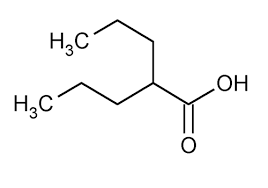
Valproic acid was first synthesized in 1882 by Beverly S. Burton, but it was not recognized for any medical purpose until the early 1960s. Valproic acid (N-dipropylacetic acid) was discovered in 1967 as an anticonvulsant and quickly became widely used in the treatment of epilepsy, particularly in the form of sodium valproate. Since 1983, divalproate, a combination of valproic acid and sodium valproate, has been available in the United States for this indication.
The development of this drug for bipolar disorder occurred in two phases. Initially, the antimanic and prophylactic effects of valpromide, a primary amide of valproic acid, were demonstrated. Later, through studies conducted in Germany and the United States, the efficacy of valproic acid derivatives in treating bipolar disorders was established.
Multiple studies have shown that divalproate is effective in monotherapy for manic episodes and is more effective than lithium in certain types of mania where lithium’s effects are weaker. Additionally, divalproate has proven effective in maintenance therapy and is easy to manage and well tolerated in the long term.
Overall, divalproate is recognized as an efficient and reliable drug for treating both bipolar disorders and epilepsy, particularly in cases where treatment adherence is a challenge.
Therapeutic Role of Valproic Acid in Modern Medicine
- Epilepsy: Valproic acid is effective against various seizure types:
- Absence seizures
- Generalized tonic-clonic seizures
- Myoclonic seizures
- Focal (partial) seizures
- Bipolar Disorder: Used as a first-line mood stabilizer, especially effective in acute manic or mixed episodes and for maintenance therapy.
- Migraine Prophylaxis: Approved in several countries for reducing migraine frequency, though not used during acute attacks.
Pharmaceutical Dosage Forms and Strengths of Valproic Acid
Use in Complex Partial Seizures: Valproate is used both as monotherapy and in combination with other antiepileptic drugs (AEDs) for treating complex partial seizures, whether they occur alone or with other seizure types.
- IV (Valproate Sodium): Administer 10–15 mg/kg/day in two divided doses over a 1-hour infusion. Maximum dose is 60 mg/kg/day. Limit IV use to 14 days and switch to oral treatment as soon as possible.
- Oral: Start at 10–15 mg/kg/day, gradually increase by 5–10 mg/kg/week, up to a maximum of 60 mg/kg/day.
Modified Release Formulations
- Delayed-release (DR): When switching from immediate-release, the same total daily dose and frequency (BID to QID) is used. After stabilization, the frequency may be reduced to BID or TID.
- Extended-release (ER): Usually taken once daily when transitioning from IR or DR forms. A dose increase of 8–20% might be needed to maintain equivalent blood levels.
Transitioning to Monotherapy
When converting from adjunctive therapy, reduce the dose of other AEDs by about 25% every two weeks. Dose adjustment may begin at the initiation of valproate or within 1–2 weeks after.
Use in Absence Seizures
Valproate is also indicated alone or in combination for treating simple and complex absence seizures, and in patients with mixed seizure types including absence seizures.
- IV: Same dosage and method as for complex partial seizures.
- Oral (Depakene, Stavzor): Start with 15 mg/kg/day, divided every 6–12 hours; increase weekly by 5–10 mg/kg/day up to 60 mg/kg/day.
Migraine Prophylaxis
Valproate is approved for preventing migraine attacks, but not for treating acute episodes.
- Stavzor: 250 mg twice daily; adjust according to clinical response, not exceeding 1000 mg/day.
- Depakote ER: 500 mg once daily for 7 days, then increase if needed to 500–1000 mg/day based on effectiveness.
Treatment of Bipolar Mania
Valproate is effective in managing manic episodes linked to bipolar disorder.
- Stavzor: Start with 750 mg/day in divided doses; titrate quickly to the desired effect without exceeding 60 mg/kg/day.
- Depakote ER: Initial dose of 25 mg/kg/day, adjusted promptly to achieve the therapeutic target, with the same upper limit.
Safety Profile and Regulatory Considerations
Valproic acid is associated with several serious adverse effects that limit its use in certain populations:
- Hepatotoxicity: Most likely in children under 2 years or those with mitochondrial disorders
- Pancreatitis: A rare but potentially fatal complication
- Teratogenicity: Known to cause neural tube defects; contraindicated in pregnancy unless absolutely necessary
- Thrombocytopenia: Platelet counts may decrease, requiring monitoring
- Hyperammonemia: Can occur especially in patients with urea cycle disorders
Due to these risks, many regulatory agencies have imposed black box warnings and require patient-specific risk-benefit assessment, particularly in females of reproductive age.
Valproic Acid Sustainable Development and Innovative Formulations
Pharmaceutical companies are constantly seeking innovative drug formulations that offer higher efficacy and fewer side effects. One example is the use of valproate semisodium or sodium valproate instead of its pure acid form, which provides better stability and greater compatibility with the body.
Sustained-release formulations also maintain stable drug levels in the bloodstream, reducing the need for frequent dosing.
These advancements not only enhance patient treatment but also create a competitive business advantage for manufacturers.
Quality Control and Analysis
In the pharmaceutical industry, precise analysis of active pharmaceutical ingredients (APIs) and controlling impurities is crucial. Common methods include:
• HPLC (High-Performance Liquid Chromatography)
• UV Spectroscopy
• FTIR (Fourier-Transform Infrared Spectroscopy)
For valproic acid, stability testing under various temperature and humidity conditions is essential since its acidic nature may react with excipients.
Pricing and Global Market of Valproic Acid
Valproic acid is one of the most commonly used generic drugs worldwide. Due to high competition, many companies have shifted towards cost-effective production methods with a focus on low production costs and efficient supply chains.
The market for this drug is particularly active in countries like India, China, and various African nations, while demand remains strong in Western markets such as the US and the European Union.
Challenges in Raw Material Supply
In recent years, export restrictions, raw material price fluctuations, and global supply chain disruptions have led to increased production costs for valproic acid. Many companies have attempted to mitigate these risks by producing APIs locally or by localizing their supply chains.
Utah Trading LLC as Reliable Supplier of Valproic Acid
In today’s pharmaceutical landscape, choosing a reliable source for active pharmaceutical ingredients is critical—especially for compounds like Valproic Acid, which play a key role in the treatment of neurological disorders.
Utah Trading LLC, with years of experience in pharmaceutical sourcing, is proud to offer high-quality Valproic Acid that meets international standards. Our focus on quality, compliance, and timely delivery ensures that our partners can rely on us with confidence.
By understanding the specific needs of the pharmaceutical industry and working closely with reputable global suppliers, we provide a seamless and professional supply experience. At Utah Trading LLC, we’re committed to building long-term relationships based on trust, quality, and consistent support.
If you are looking for a dependable partner for your Valproic Acid needs, Utah Trading LLC is here to help.
Conclusion: The Industrial and Medical Value of Valproic Acid
Valproic acid continues to be a cornerstone molecule in both industrial pharmaceutical production and clinical medicine. Its unique chemical simplicity and broad therapeutic window make it a viable compound for large-scale production. However, its synthesis and use must be closely regulated due to safety concerns and its teratogenic potential.
For API manufacturers and pharmaceutical companies, understanding the raw material sourcing, synthesis process, and regulatory landscape is key to developing high-quality, compliant formulations of valproic acid.


